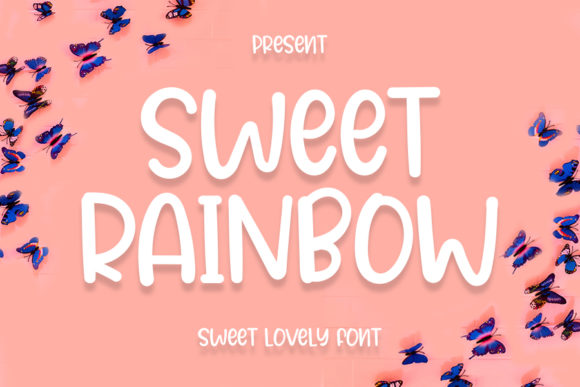
Sweet Rainbow Font for Web Design
Sweet Rainbow is a display font that brings charm and whimsy to digital projects. Its playful curves and vibrant personality make it ideal for creative web design, where visual appeal meets usability. As a designer, I've found that the right typeface can elevate a website from functional to unforgettable.
Visual Characteristics of Sweet Rainbow
Sweet Rainbow has a distinct style that blends cuteness with clarity. The letterforms are rounded and slightly exaggerated, giving them a soft, approachable feel. This makes the font perfect for designs that aim to evoke joy or creativity. It's not overly decorative, so it maintains readability even in larger sizes.
The font’s character set includes a variety of stylistic alternates, which allow for subtle variations in letter shapes. This feature adds visual interest without compromising legibility, especially when used for headings or call-to-action buttons.
Applying Sweet Rainbow in Web Projects
When designing a landing page, using Sweet Rainbow for the hero title can immediately capture attention. Its whimsical nature works well for creative industries like art, design, or lifestyle brands. For example, a boutique online store selling handmade goods could use Sweet Rainbow for product banners to convey warmth and uniqueness.
In a coaching website, this font might be used sparingly—perhaps for section headers or motivational quotes. It adds personality without overwhelming the user. Similarly, a course sales page can benefit from Sweet Rainbow in the headline, making the content feel more inviting and engaging.
For portfolio sites, Sweet Rainbow can help establish a personal brand tone. When paired with a clean sans serif font for body copy, it creates a balanced visual hierarchy. This combination ensures that the design remains professional while still reflecting the designer's unique style.
Readability and Responsive Design
While Sweet Rainbow is primarily a display font, its readability on screens is impressive. On mobile devices, it performs well in larger sizes, making it suitable for headers and buttons. However, for smaller text such as body copy, pairing it with a more straightforward sans serif font is recommended to maintain legibility.
When using Sweet Rainbow over dark backgrounds or image overlays, it's important to ensure sufficient contrast. Testing different color combinations will help achieve the best results. For instance, using a light background with a dark variant of Sweet Rainbow can enhance visibility and user engagement.
Font Pairing and Brand Identity
Font pairing is crucial for creating a cohesive design. Sweet Rainbow pairs beautifully with minimalist sans serif fonts like Helvetica or Arial for body text. This contrast between decorative and simple typography helps guide the user’s eye through the layout and reinforces the brand message.
For editorial-style websites, combining Sweet Rainbow with a serif font can add elegance and sophistication. This mix is particularly effective in blog headers or magazine-style layouts, where a balance between playfulness and professionalism is needed.
When building a brand identity kit, including Sweet Rainbow as a primary font can help unify all digital assets. From social media graphics to email newsletters, consistent typography strengthens brand recognition and trust.
Commercial Use and Licensing
If you're planning to use Sweet Rainbow on a client project, an online store, or a SaaS landing page, it's essential to check the licensing terms. Most premium display fonts require commercial licenses for web use, ensuring that you're compliant with the font provider’s rules.
Always verify that the font supports the languages and characters needed for your target audience. Some display fonts may have limited multilingual support, which can affect their usability in global markets.
For designers working with templates or digital assets, having access to webfont formats is crucial. Ensure that Sweet Rainbow is available in formats like WOFF or WOFF2 for optimal performance on websites.
Practical Applications and Examples
Sweet Rainbow shines in short phrases and headlines. It’s not suited for long paragraphs but excels in decorative accents, logo text, and branding elements. A great example is using it for a blog header that introduces a new article series. The font instantly sets a cheerful tone and invites readers to explore further.
In digital ads, Sweet Rainbow can be used for taglines or promotional banners. Its quirky appeal aligns well with campaigns targeting younger audiences or niche markets. When used thoughtfully, it enhances the emotional impact of the message without distracting from the core content.
For a digital product launch, incorporating Sweet Rainbow into the landing page’s CTA button can increase click-through rates. The font’s friendly appearance encourages users to take action, making the conversion process feel more natural and engaging.
Whether you're designing a portfolio site, an online store, or a marketing campaign, Sweet Rainbow offers a versatile solution that balances creativity with functionality. Its ability to adapt across various design contexts makes it a valuable asset in any designer’s toolkit.